
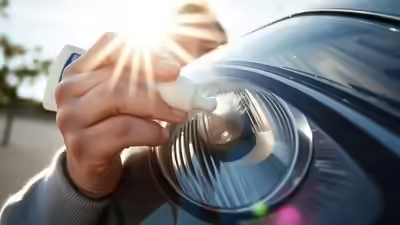

For do-it-yourself vehicle maintenance, one of the most common ways to restore fogged-up headlights is by using toothpaste. Although toothpaste is primarily used for cleaning teeth, its mild abrasives are perfect for cleaning the dirt and oxidation off plastic headlights.Toothpaste seems to be a popular remedy to treat hazy headlights at home quickly. However, can toothpaste really give you clear headlights forever? To figure out which of the toothpaste and professional headlight restoration products will help us get clear headlights safely and effectively, we should compare them to scientific research findings.The effect of toothpaste on headlightsToothpaste acts by polishing the plastic lens gently. Its abrasive properties remove a small part of the layer that causes oxidation, thus increasing the visibility.The UV Aging Effects on Polycarbonate Properties study reports that exposure to sunlight causes yellowing and deterioration of plastic surfaces. Toothpaste can help smooth and improve the clarity of the surface, but it cannot restore the structure of the lens nor protect it from further ultraviolet radiation.However, the effectiveness of toothpaste is reduced to zero rather quickly after two or three weeks at most. The research on the Effects of UV accelerated aging on the mechanical and optical properties of polycarbonate demonstrates that ultraviolet rays constantly degrade the transparency and strength of the material. With no protective layers applied, headlight lenses oxidise repeatedly in a very short time frame.
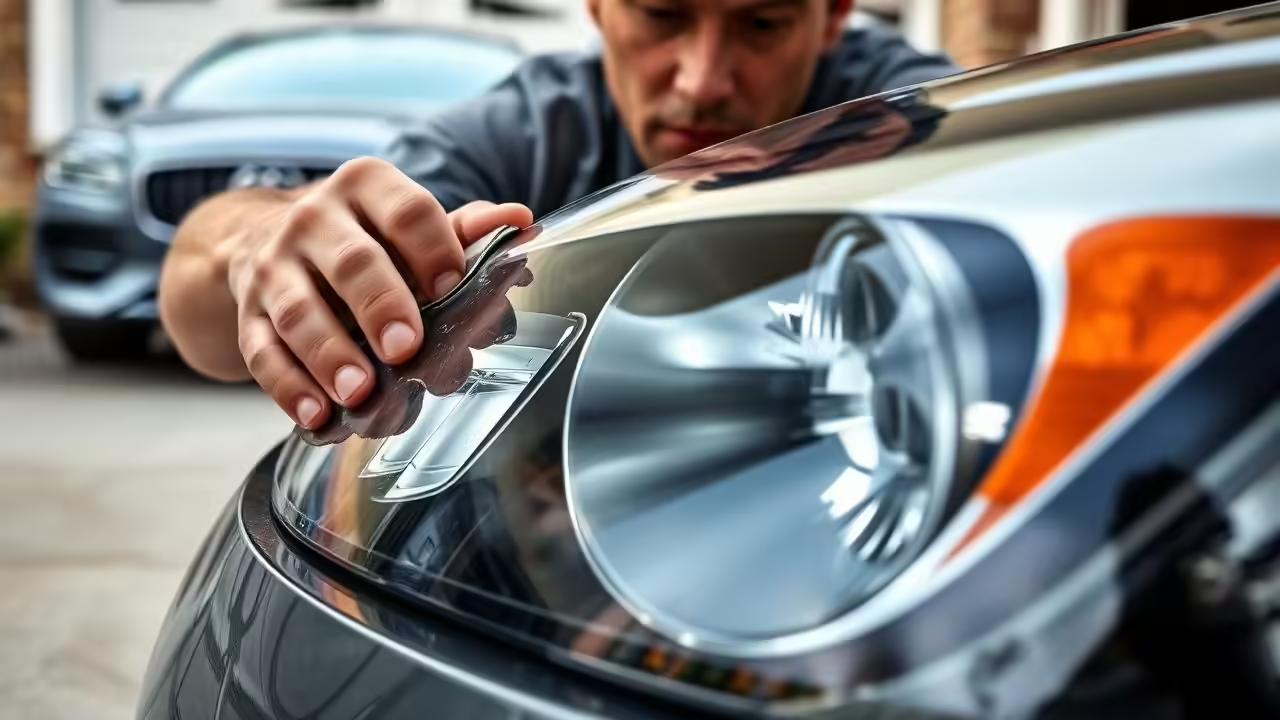
Unlike professional restoration, toothpaste offers no UV protection, leading to rapid re-hazing. For lasting clarity and safety, professional treatments or DIY methods incorporating UV sealants are recommended.
DIY solutions and their inefficiencyOne can also choose from vinegar, baking soda, or commercial glass cleaning products. These will help in cleaning the lenses, but cannot do anything about oxidation.Scientific reviews on photodegradation, like the SpringerPlus study on Photodegradation and photostabilization of polymers, explain that plastics oxidise and discolour over time under UV exposure, which surface cleaning alone cannot prevent.Automotive experts and Allstate Insurance have offered information about using UV sealants after washing the windshield, which can greatly increase visibility. The sealants will act as a barrier between the sun’s rays and the glass, just like in professional treatments.Cleaning your headlights using only toothpaste will not work. It will make your lenses hazy and less durable; hence, you will have to clean them several times again, which may even affect your driving at night.Choosing to have professional headlight restoration services will provide tangible results. Professionals begin by wet sanding the lenses using varying grits, followed by polishing until the lenses are clear again. Finally, the professionals apply a coating that protects against UV rays, preventing hazing.The article Weathering of Polymers and Plastic Materialspublished on Springer Nature proves that yellowing can be avoided if the material is resistant to both UV rays and wear.DIY hobbyists can try sanding blocks and sealers to achieve some level of professional results while staying away from professionals, at least until the work done becomes as good as using toothpaste.A Review of Weathering Studies in Plastics and Biocomposites, published by MDPI Polymers, states that it’s necessary to protect plastics from UV rays and other weathering processes in order to maintain their optical properties. Toothpaste doesn’t contain such compounds and provides only an aesthetic and short-term solution.Tips on how to use toothpaste at homeFirst of all, you should wet the surface of the headlight before applying a layer of toothpaste. Then polish the headlight with the help of a cloth. Wash it and dry it with a towel.Testing a small section before treating the entire lens prevents potential scratches or reactions. While this method is inexpensive and quick, combining it with UV protection afterwards will maximise effectiveness and reduce the frequency of reapplications.Using toothpaste might be easy for temporary improvements, but understanding its limitations is very important. With professional products or methods, supported by studies on UV degradation and polymer degradation, longer-lasting improvement is guaranteed.For car owners who would like to balance both convenience and safety, combining cleanings with UV protection will help in maintaining headlight brightness.